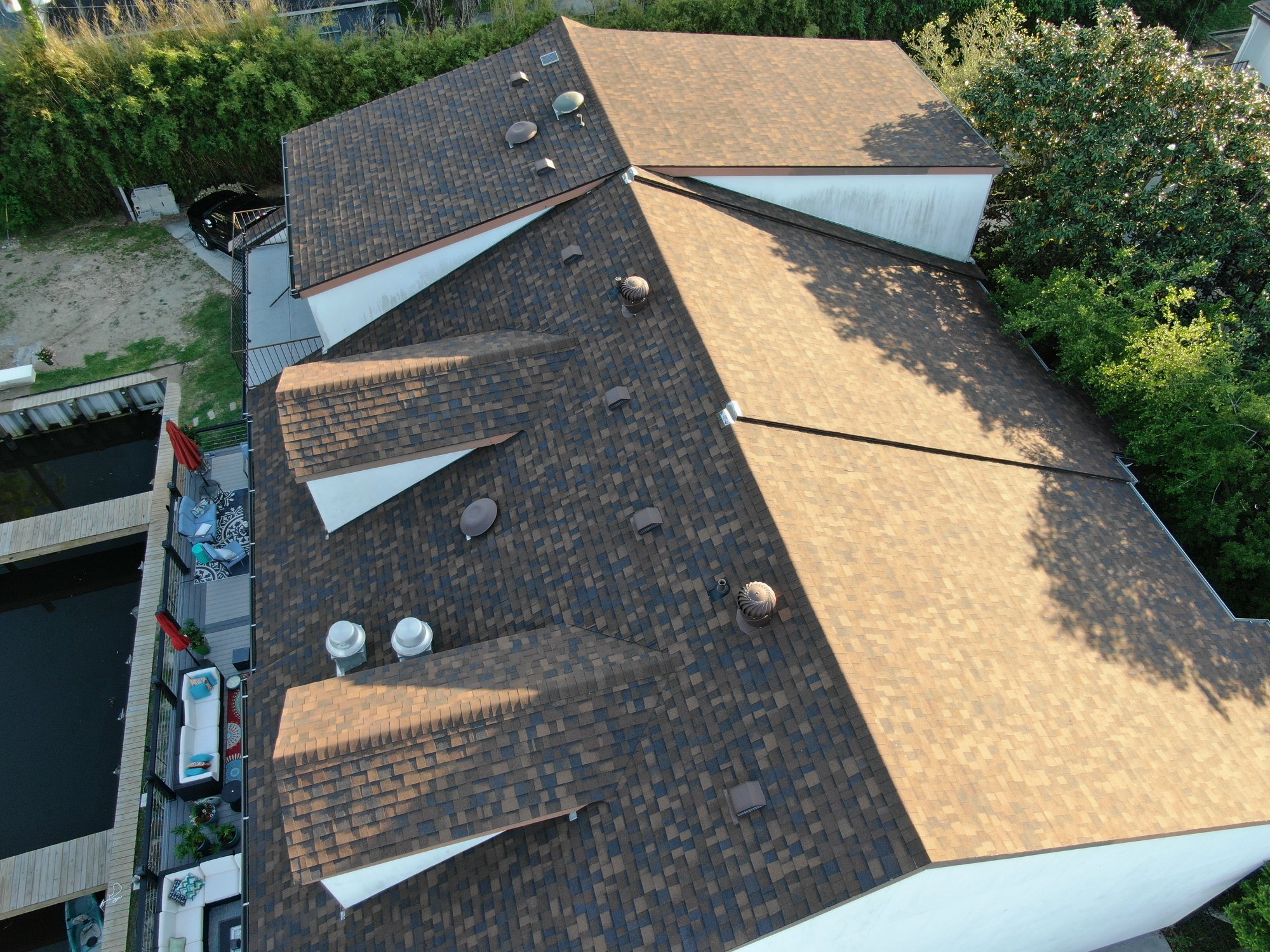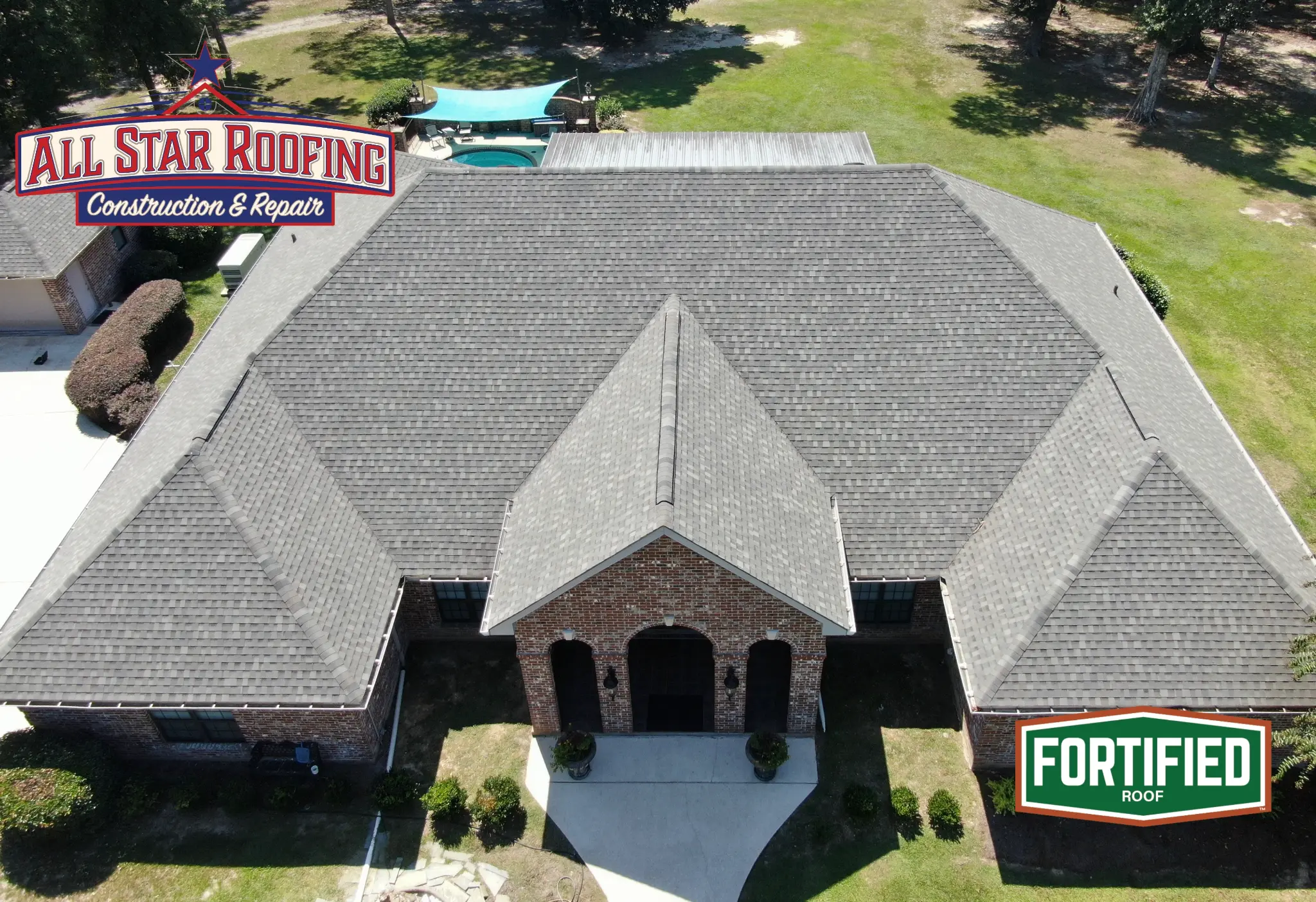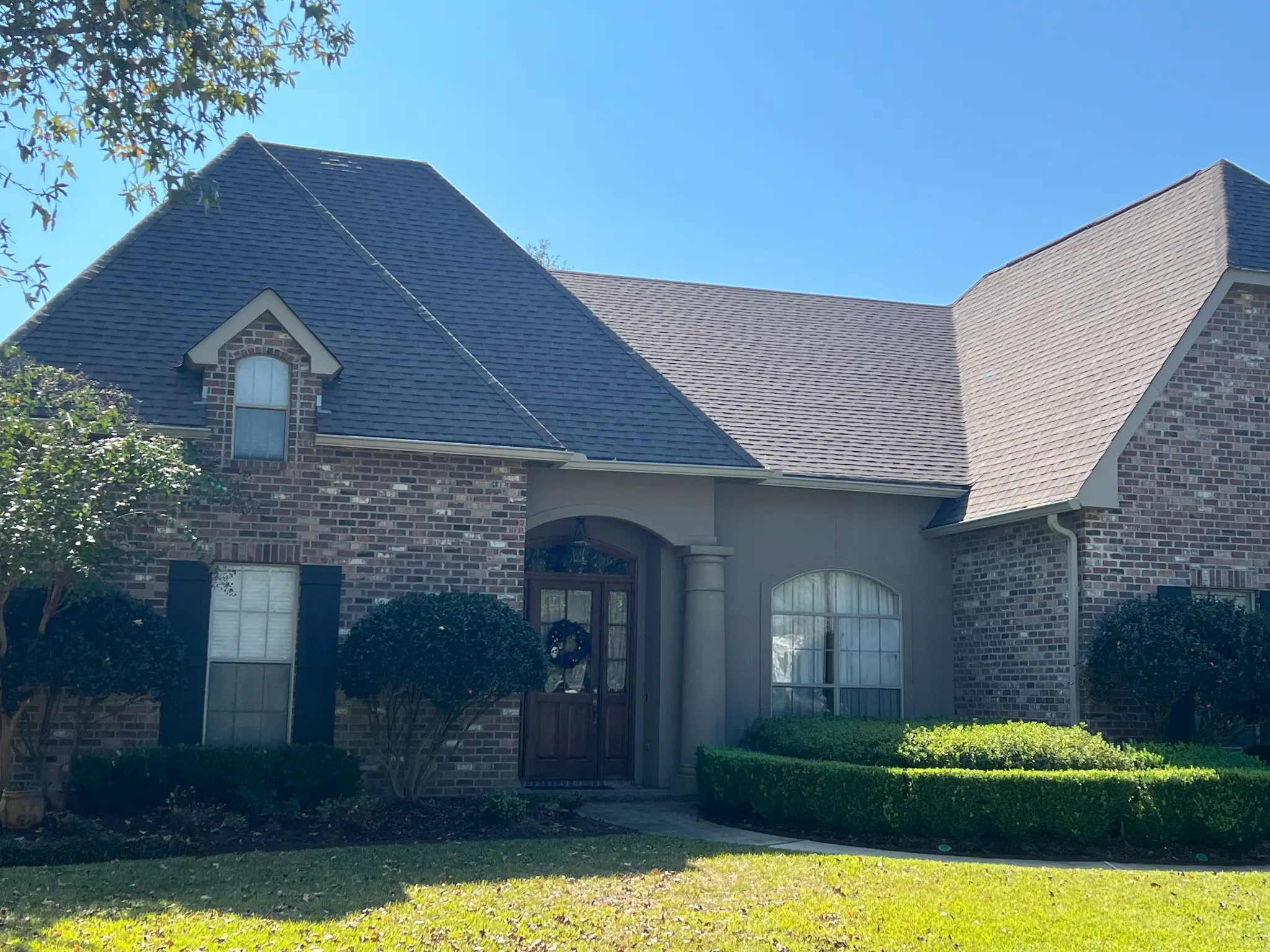
Two roofs that look identical from the street
Park in front of two newly reroofed houses in Mandeville — one built to the FORTIFIED Roof standard, one built to standard code — and you likely cannot tell them apart. Same architectural shingles, same ridge line, same clean edges. The difference is in details you will never see from the driveway: how the deck seams are sealed, what nails hold the decking down, and how the edges are locked against wind. Those hidden details are the entire point, because they determine what happens in the two or three hours of a storm that the roof exists for.
Louisiana homeowners hear "FORTIFIED" mostly in connection with the state grant program, and the grant coverage tends to crowd out a more basic question: as a construction standard, what is actually different about a FORTIFIED roof, and when is the upgrade worth it? That is what this article covers.
What FORTIFIED actually is
FORTIFIED is a construction and certification standard developed by the Insurance Institute for Business & Home Safety (IBHS), the insurance industry's research lab. IBHS studies how real homes fail in real storms — including full-scale wind testing on complete buildings — and the FORTIFIED Roof standard is the distilled answer to a specific research finding: most catastrophic storm losses start at the roof, and most roof losses follow a predictable sequence. Wind can damage edges and roof covering, allowing rain through exposed decking.
The standard interrupts that sequence at each step. Crucially, FORTIFIED is not a product or a shingle brand — it is a set of installation requirements plus third-party verification. An independent certified evaluator documents the work at specific stages, and IBHS determines designation after reviewing evaluator documentation. That verification is what separates a FORTIFIED roof from a roof that was merely "built strong," and it is what an insurance company can rely on.
The construction differences, step by step
Here is what changes on the roof deck when we build to the FORTIFIED standard instead of standard code minimum.
- Ring-shank nails for the decking. The plywood or OSB deck is fastened with ring-shank nails on a tighter nailing pattern. The ridged shank grips the framing dramatically better than the smooth nails allowed by standard practice, which matters because deck panels lifting off the rafters is a catastrophic, house-opening failure in high wind.
- A sealed roof deck. Every seam between deck panels is sealed with taped seams or a full peel-and-stick membrane. This is the standard's most valuable requirement for Louisiana homes. Testing shows that when shingles are stripped off, an unsealed deck can let a large share of wind-driven rain straight into the attic; a sealed deck keeps most of it out. It means that even if the roof covering loses a battle with a storm, the house underneath stays substantially dry — the difference between replacing some shingles and gutting wet drywall, insulation, and flooring.
- Locked-down edges. Wider drip edge, fully adhered starter strips, and enhanced fastening at eaves and rakes. Wind failures start at edges; the standard hardens them specifically.
- Wind-rated covering, properly attached. Shingles carry an appropriate wind rating and are installed per the tested fastening schedule — the difference between a wind rating on the wrapper and one the installed roof can actually deliver. An optional hail supplement adds impact-rated shingles for homeowners who want it.
- Third-party evaluation. An IBHS-certified evaluator verifies the work — including stages that get covered up, like deck nailing and seam sealing — and IBHS reviews documentation before determining designation; reinspection is required for renewal.
Notice what is not on the list: exotic materials. A FORTIFIED roof is mostly the same materials installed to a higher standard with better fasteners and a sealing step, plus documentation. That is why the cost difference is a modest percentage of the project, not a multiple of it.
What the upgrade buys you
Storm performance. The engineering case is straightforward: keep the deck attached, keep the water out even if shingles are lost, and protect the edges where failure begins. For a home that will see tropical weather — which is to say, every home on the Northshore — this is protection aimed precisely at the most likely loss scenario.
Insurance leverage. Available insurance discounts depend on the insurer, policy and designation requirements, and the certificate gives your agent something concrete to file. Discounts vary by carrier and policy, so no honest contractor will promise a number — but unlike most home upgrades, this one comes with a document your insurer formally recognizes. Over a roof's life, recurring premium savings can offset a meaningful share of the upgrade cost.
Resale documentation. A transferable designation is a rare thing: proof of construction quality that survives the sale of the house.
And yes — the Louisiana Fortify Homes Program periodically offers grants that can cover much of a FORTIFIED upgrade for selected homeowners. That program has its own rules and windows, and we covered it separately in our grant program guide. The point of this article is that the standard is worth understanding on its own merits, grant or no grant.
When standard replacement is still the reasonable choice
A standard code-compliant replacement from a careful installer is a good roof, and there are cases where it is the sensible scope: a rental or short-hold property where the owner will not see the insurance payback, a budget that is already at its limit, or a reroof where timing pressure rules out the evaluator scheduling. FORTIFIED is an upgrade, not a moral test.
The one argument we push back on is "I'll add it later." The core of the standard lives at the deck level — nailing and seam sealing — which is only accessible while the roof is off. Retrofitting FORTIFIED onto a finished roof means doing the tear-off again. The upgrade is cheap during a replacement and expensive any other time, which is why the right moment to decide is before the replacement, not after. If you are still weighing whether this is a repair year or a replacement year, start with our repair versus replacement guide.
How to decide
- Planning to stay 5+ years in a primary home? The combination of storm protection and recurring insurance discounts makes FORTIFIED the default recommendation.
- Roof at end of life and hurricane exposure a top worry? The sealed deck alone is the single most effective storm upgrade available to you.
- Tight budget? Price both scopes side by side. The gap is usually smaller than homeowners expect, and seeing the real number beats guessing.
Whichever way you lean, the decision starts with knowing where your current roof stands — a proper inspection tells you whether you are shopping for a roof this year or planning for one in three.
Conclusion: the difference is under the shingles
A FORTIFIED roof and a standard replacement look the same on a sunny day. In a named storm, the ring-shank nailing, sealed deck, and hardened edges are intended to improve wind resistance and reduce water entry; they do not guarantee a damage-free roof. All Star Roofing builds both, and we build FORTIFIED to the standard with certified evaluation — see our FORTIFIED roofing in Mandeville page, or request a free roof replacement estimate and we will price your replacement both ways so you can decide with real numbers.
Frequently asked questions
What makes a FORTIFIED roof different from a normal roof?
Ring-shank nailing of the deck, sealed deck seams, hardened edges, wind-rated covering installed to the tested spec, and third-party verification by an IBHS-certified evaluator.
Is FORTIFIED a shingle brand?
No. It is a construction and certification standard from IBHS. It mostly uses the same materials, installed to a higher standard and independently verified.
Does a FORTIFIED roof lower insurance premiums?
Louisiana insurers are required to offer discounts for FORTIFIED-designated homes, but the amount varies by carrier and policy — ask your agent for your number.
Can I upgrade my existing roof to FORTIFIED later?
Not practically. The core requirements live at the deck level, which is only accessible during a reroof — the upgrade is cheap during replacement and expensive any other time.
About All Star Roofing
All Star Roofing is a local Mandeville roofing company serving Saint Tammany Parish with roof replacement, roof repair, storm damage documentation, gutters, ventilation, and FORTIFIED roofing guidance.
Have a roof question about your Northshore home?
Call (985) 626-7663 or request a free roof replacement estimate from All Star Roofing in Mandeville.
Request Free Roof Replacement Estimate